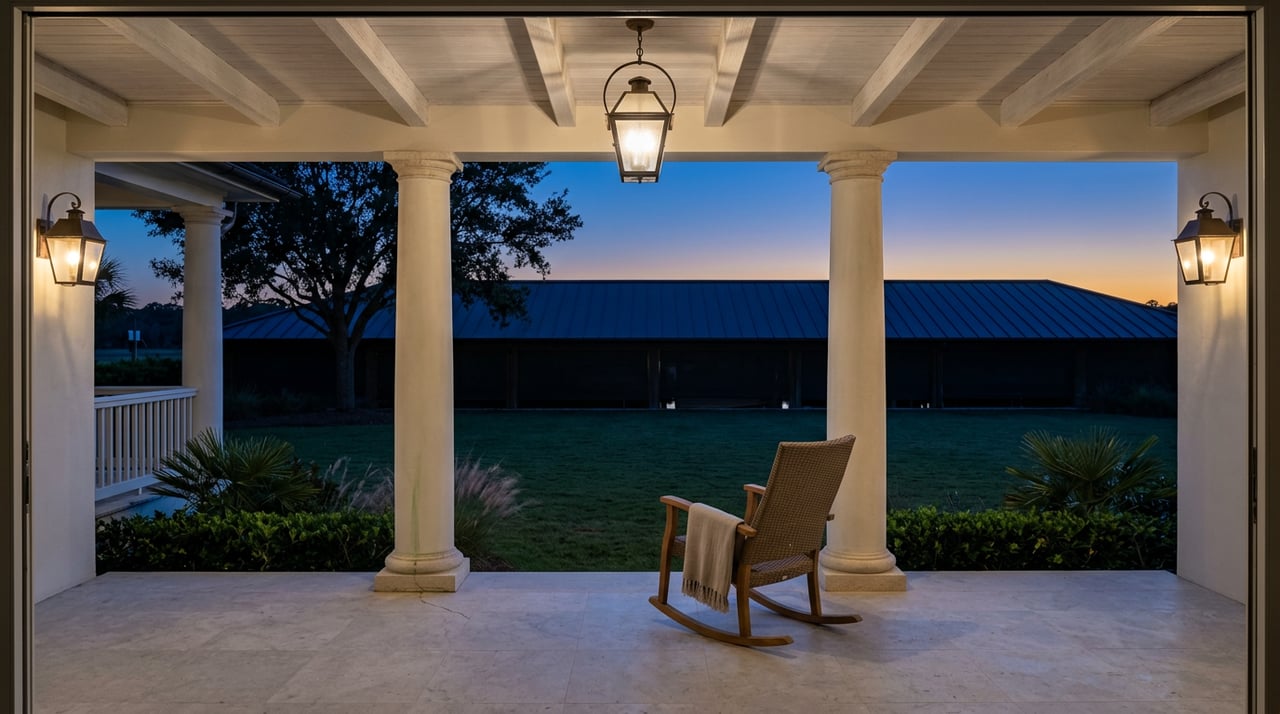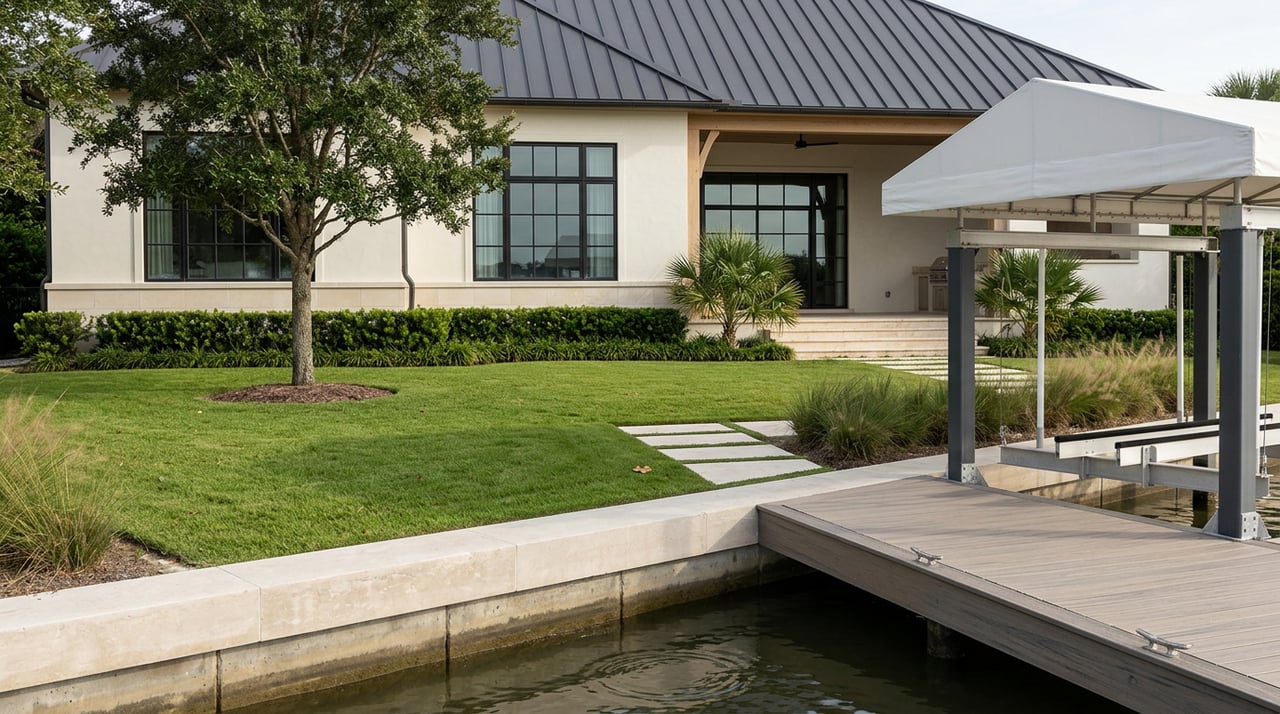
The call every waterfront seller dreads comes eight days into the buyer's option period. Their agent has pulled the file. The dock permit is in the previous owner's name. The bulkhead was rebuilt in 2019 and no one can find the approved drawings. The buyer wants a $40,000 credit or the deal dies Friday.
That call is not about the house. It is about a second asset most sellers do not know they own.
The Second Asset in Every Waterfront Sale
On Lake Conroe, a waterfront home is really two properties stapled together. The first is the house and lot. The second is the paperwork that lets the house behave like a waterfront home in the first place: the San Jacinto River Authority license for the dock, the license for the boat lift, the license for the bulkhead, and any Corps of Engineers or county approvals attached to prior shoreline work.
The SJRA is unusually direct about the point. On its residential licensing page, it states that the right to build, operate, or maintain a private structure on Lake Conroe is not inherent to waterfront ownership, that a license is required for the structure to exist at all, and that the license can be revoked. A dock without a current file is a dock the reservoir manager can order removed.
Buyers and their lenders know this. Their agents ask for the file during the option period. If the seller cannot produce it, the deal reprices to the cost of producing it, plus a risk premium for the time and uncertainty. The final number on the settlement statement is set at that moment, not on listing day.
The thesis of this post is simple. In 2026, a Lake Conroe waterfront seller who arrives at the listing table with a complete transferable permit file defends the top of their price range. A seller who does not, watches buyers move that money into their pocket.
The Pre-Listing File, Line by Line
Assemble this before your listing photos are shot. Every item exists for a specific buyer question during the option period.
| Document | Issuing authority | Why the buyer's agent asks for it |
|---|---|---|
| Current residential structure license for the dock | San Jacinto River Authority | Confirms the dock is legal to occupy and use |
| License for the boat lift | San Jacinto River Authority | Lifts are separately regulated; a licensed dock with an unlicensed lift is still a compliance gap |
| License for the bulkhead or seawall | San Jacinto River Authority | Bulkheads are permitted separately from docks and often revealed as the missing document |
| Approved plans and any as-built drawings | Contractor file plus SJRA record | Lets a marine inspector verify what was built matches what was approved |
| Corps of Engineers correspondence for any dredging | U.S. Army Corps of Engineers, Galveston District | Historical dredging usually required a federal touch; buyers ask if a repeat is legal |
| Electrical and floodplain permits for dock power | Montgomery County | Dock wiring is a common inspection callout; permit history closes the question |
| HOA or ARC approval letters for shoreline work | Bentwater, Walden, April Sound, Cape Conroe or other community boards | Confirms the structure satisfies covenants stricter than SJRA minimums |
| OSSF permit and maintenance contract if on septic | Montgomery County and SJRA where applicable | Waterfront septic near the reservoir carries additional scrutiny |
| Current survey showing improvements relative to the ordinary high water line | Licensed Texas surveyor | Establishes where private ownership ends and SJRA jurisdiction begins |
| Annual license fee receipts for the last three years | Owner records | Demonstrates the file has been maintained, not merely inherited |
Two documents on this list drive more repricings than the other eight combined: the bulkhead license and the ordinary-high-water-line survey. Both tend to be missing on homes that have changed hands once already since the original construction.
Why Transferability, Not Existence, Moves the Price
A permit that exists is not the same as a permit that transfers cleanly at closing. Some SJRA licenses require a fresh application on ownership change. A reapplication puts the new owner in front of current rules, which are frequently stricter than the rules under which the original structure was approved. If the current dock is wider than the current setback allows, a reapplication is where that discrepancy surfaces.
Buyers price the reapplication risk two ways. If the option period allows time and the seller cooperates, the buyer's agent will demand the reapplication be initiated before closing. If not, the buyer will offer less and absorb the risk themselves.
A seller who has already opened a dialogue with SJRA before listing, confirmed license status in writing, and identified whether a straight transfer or a fresh application applies, removes both scenarios from the negotiating table. That is the mechanism through which pre-listing paperwork translates into final sale price.
The 2026 Water-Level Backdrop Every Serious Buyer Will Raise
Lake Conroe sits at a 201-foot conservation pool, confirmed on the SJRA's public conditions page. The reservoir was 98.7% full as of August 2, 2026, according to Water Data For Texas.
Two operational realities sit on top of that number. First, under Active Storm Management, the City of Houston, which owns two-thirds of the reservoir's water, may request diversions between April 1 and June 1 to lower the lake toward 200.5 msl ahead of forecast storms. Second, in July 2026, Community Impact reported that SJRA, the City of Houston, and the City of Humble launched a $1 million joint operations study to coordinate pre-releases between Lake Conroe and Lake Houston once eleven new spillway gates come online at Lake Houston, which will lift discharge capacity from 10,000 to 78,000 cubic feet per second.
Informed buyers in 2026 are asking whether the dock elevation, gangway design, and bulkhead cap on your property will still work when the lake is drawn a foot below normal pool. Your pre-listing file needs to answer that question. If the dock was engineered for a static 201-foot pool, say so honestly and price accordingly. If it was designed with operational swings in mind, provide the drawings that prove it. Guessing during a walk-through with a buyer's marine inspector is where credibility, and price, is lost.
Community-Specific Paperwork the Buyer's Agent Will Ask For
The named waterfront communities carry different documentation burdens.
Bentwater describes itself as a 1,400-acre master-planned community along 12.5 miles of Lake Conroe shoreline. Its ARC has design standards for docks and shoreline structures that are frequently stricter than SJRA minimums. Pull the current guidelines from the community office and confirm any prior approvals in writing.
Walden is organized as multiple sections with separate governance documents that reference vacant lots, single-family homes, townhomes, and condominium units. If a listing includes a shared dock or community slip, the buyer's agent will ask which section's rules apply and whether an assessment is pending.
April Sound layers architectural review on shoreline structures alongside the SJRA license. If prior owners performed work without ARC signoff, that gap surfaces during resale.
Cape Conroe and other canal-front communities carry an extra question about historical dredging. Canal depth at your bulkhead matters more than any neighborhood label, and a documented dredging permit tells a buyer what the actual usable depth is, not what the listing photo suggests.
The Pre-Listing Sequence
- Request a written confirmation of license status for every shoreline structure directly from SJRA. Do not rely on the previous closing file.
- Order a current boundary and topographic survey showing the ordinary high water line, the dock footprint, and the bulkhead face.
- Retrieve HOA or ARC files for any shoreline work performed during your ownership.
- Commission a marine inspection before listing. A private inspection lets you address findings on your timeline instead of the buyer's.
- Assemble the file as a single PDF that the listing agent can share with qualified buyers under an option-period NDA if appropriate.
- Price the home against the condition of the file, not against a comp that may or may not have had one.
A seller working with a broker who is also a certified residential appraiser can price the file into the listing number rather than reacting to it during negotiations. That is where valuation experience separates a defended sale price from a discounted one.
A Short FAQ
Do I need to disclose a lapsed dock license on the Texas seller's disclosure? You disclose what you know. If you know the license is not current, the honest path is to say so and quote a fix in your listing package. Buyers reward transparency more consistently than they reward silence.
If a prior owner built the bulkhead without an SJRA license, is that my problem to fix before selling? It becomes your problem the moment a buyer's agent asks for the file. Address it before listing, or price the home to reflect the resolution cost. Trying to close around it usually costs more than fixing it.
Does a boat lift transfer with the dock license or separately? Boat lifts are typically treated as their own regulated structures on Lake Conroe. Confirm each item on your file individually rather than assuming one license covers the whole shoreline setup.
Ready to List With the File in Order
A defended sale price on Lake Conroe starts with the paperwork on the wall long before the sign goes in the yard. If you are considering a sale in the next twelve months and want a broker-appraiser to review your permit file and price your home against what buyers will actually verify, Sarah Conway Properties will meet you at the property.
Get a Confidential Market Evaluation.